Trending

Walk into a kitchen anywhere from Lisbon to Beirut and you can nearly guess the meal from the bread basket. A dark sour loaf in a Tuscan hill town, paper-thin pita in the Levant, ring-shaped sesame breads in Turkey, a floury round in a Moroccan souk. The wheat behind them is largely a single species, bread wheat, and it has been in the Mediterranean for a very long time. What follows is the story of how that grain became the quiet constant of the region's cooking — and how the habits it created still shape what lands on the table. It is a history written in flour dust, oven smoke, and the daily calculation of how much grain a household can afford.
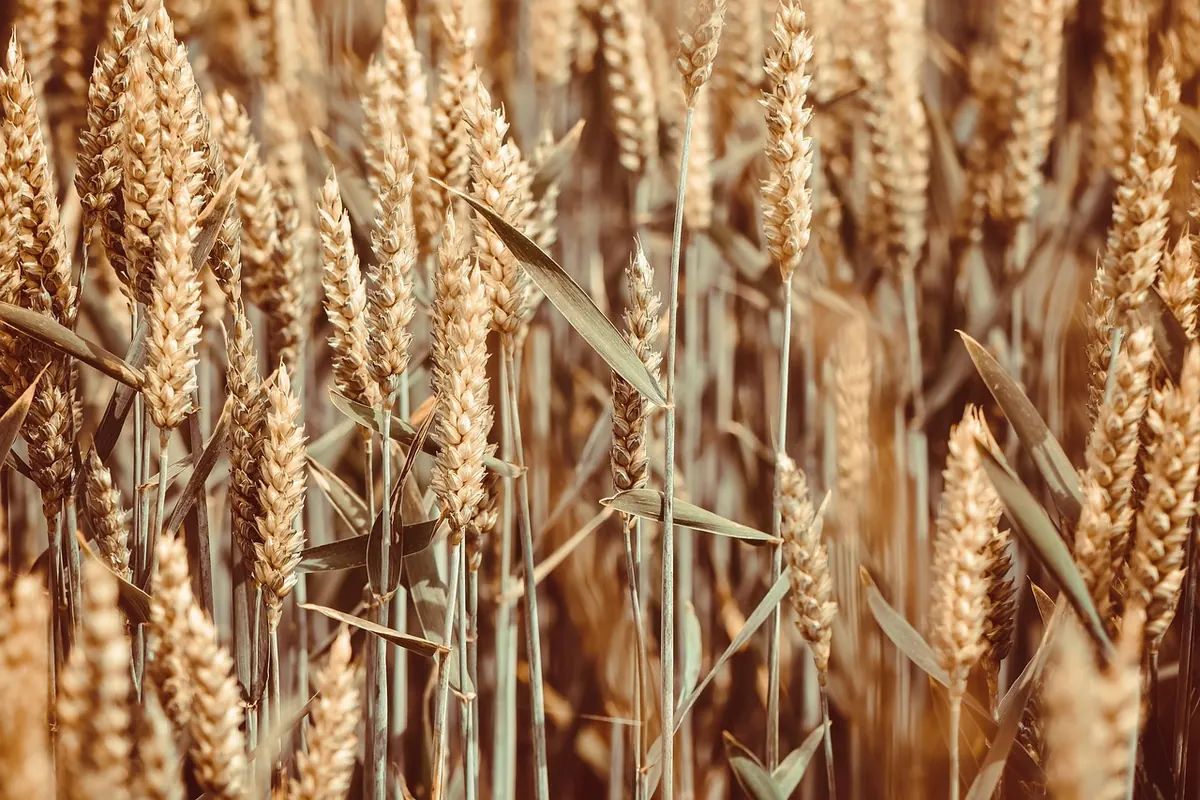
Bread wheat, Triticum aestivum, is a hybrid: the offspring of a domesticated emmer and a wild grass that happened to meet somewhere in the Fertile Crescent. That accident produced a gluten complex elastic enough to trap gas, which is why a loaf can rise and stay risen. Older wheats such as einkorn make a fine flatbread but a stubborn, heavy loaf. Bread wheat made the airy crumb possible, and once a grain can do that, cooks build their cooking around it.
The grain had other advantages that mattered as much as gluten. Bread wheat threshes cleanly, its grains coming free of their husks with far less pounding and winnowing than hulled wheats demand. It also adapted to a wide band of climates and soils, from the dry Levantine interior to the wetter edges of the northern Mediterranean, and it stored well in sealed jars or granaries. A grain that is easy to process, reliable to store, and capable of becoming a risen loaf is a grain that invites settlement, trade, and ritual. Bread wheat did not simply taste better; it made the daily work of feeding a household more predictable.
From the eastern Mediterranean the grain moved west with traders and settlers, then in bulk with the Roman state. Rome fed itself on grain shipped from Egypt and North Africa, and the city's bread depended on a supply line that was as much a political instrument as a food system. Where the fleets went, bakeries followed. Greek and Roman writers often ranked peoples by the grain they ate, with fine wheat bread near the top and barley or millet well below. Snobbery, yes — but snobbery that tells you what bread had come to mean.
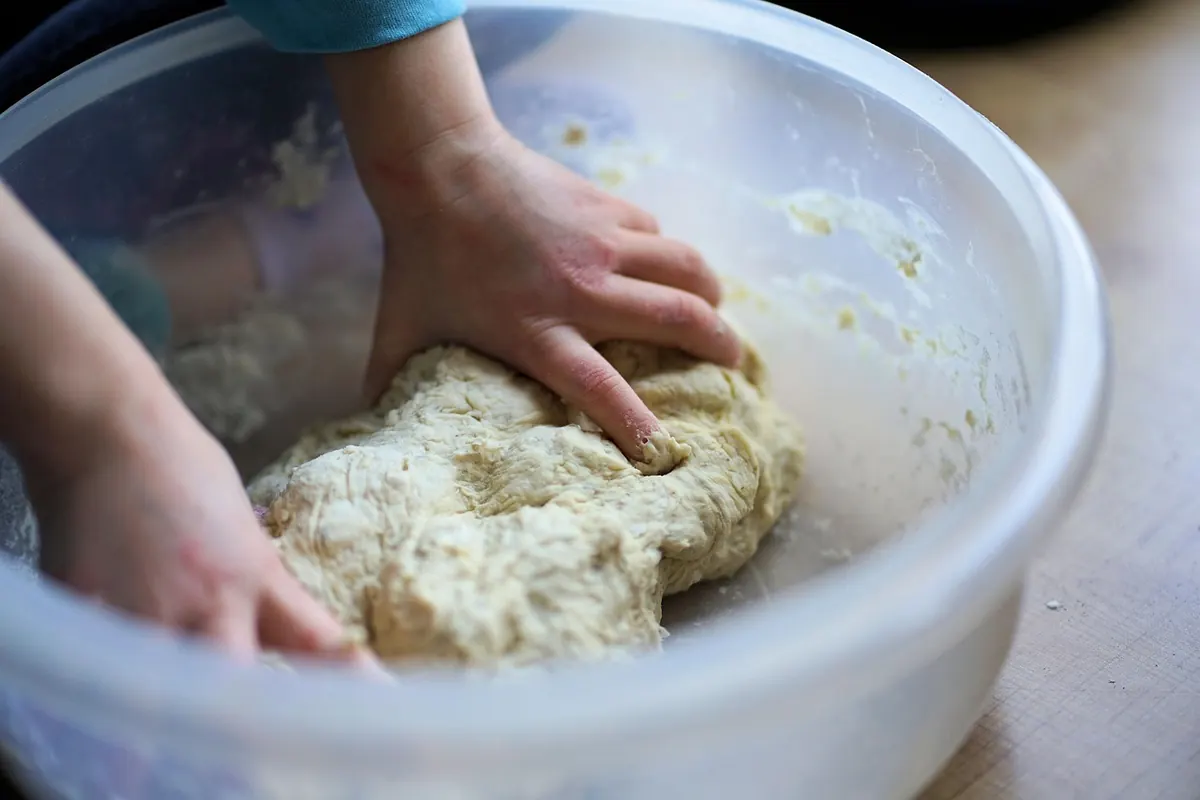
For a long while, bread was a household chore: grain pounded or ground between stones, dough kneaded, flat rounds baked on a hot surface or under an upturned pot. The rotary mill and the domed oven changed the scale of the job. In Roman towns, bakeries became substantial businesses, with millstones turned by animals and ovens large enough to serve a neighbourhood. Loaves from Pompeii, carbonised in the eruption and recovered intact, show a flat round scored into eight wedges — practical portioning for a bread that would be torn, not sliced.
After Rome, the bakehouse became a piece of local power. In much of medieval Europe the oven belonged to the lord of the manor and households were obliged to bake there for a fee; in villages that grew into towns, communal ovens served the same function under municipal rules. Authorities fussed over the price and weight of a loaf in a way they fussed over little else, because bread was most of the calories on the table. Flour quality divided the classes neatly: fine sifted wheat for those who could pay, coarse blends of wheat, rye and barley — maslin, in the English term — for everyone else.
In the Islamic Mediterranean, the bakehouse was often a civic institution as well as a business. Neighbourhood ovens in cities such as Cairo, Fez, and Damascus served households that had no oven of their own, and bakers were subject to inspectors who checked weights, prices, and the cleanliness of the flour. Bread was also a charitable currency: endowments provided loaves for the poor, travelers, and students, and a bakery attached to a mosque or a Sufi lodge could become a small engine of urban life. The details differed from city to city, but the principle held across the region: once bread depends on a shared oven, it becomes a matter of public concern.
Almost every one of those loaves was leavened with something alive. The standard method was sourdough: a lump of yesterday's dough kept back, fed with flour and water, and used to raise tomorrow's batch. Italian bakers still call it lievito madre, mother yeast; Spanish ones talk of masa madre. Brewers' yeast and, much later, commercial pressed yeast entered the picture, but for most of the story the sourness was part of both the flavour and the keeping quality — an acidic crumb stales more slowly and resists mould.
You can still taste the difference. A long-fermented loaf has a crust that crackles and a crumb with a faint tang of yoghurt or apples, and it stays edible for days rather than hours. The sponge methods of Italian baking, biga and poolish, are descendants of the same idea: give the flour time with water and a little leaven before the main mix, and let the grain do some of the work. A baker who rushes the ferment gets volume, perhaps, but not the deep wheat flavour or the keeping power that made bread a practical food rather than a fragile luxury.
This is also why bread and time have always been linked in Mediterranean kitchens. The dough might be mixed at night and baked before dawn; the starter might be shared between neighbours when a family moved house; the oven might be heated once a week and used for bread, then for trays of vegetables or a pot of beans as it cooled. Fermentation was not a culinary trick. It was a way of stretching scarce fuel, scarce yeast, and scarce hours.
Bread wheat never erased the others. Durum wheat, harder and yellower, held the south: it makes semolina, and semolina makes the great keeping breads of the region. Within a few hundred kilometres the same grain turns into wildly different things.
Read that list as a map of local conditions. Where fuel is scarce, breads are thin and fast. Where durum grows well, the crumb turns yellow and the crust dark. Where sesame is cheap, rings appear on every corner. The same species bends to climate, economy, and ceremony.
In the Mediterranean, bread is rarely just a side. It is the utensil, the thickener, and the rescue plan for everything that would otherwise go stale. In the Levant, fattoush turns yesterday's pita into a crisp, sour counterpoint to tomatoes and herbs. In Tuscany, panzanella soaks stale bread with tomatoes, vinegar, and olive oil until it becomes a salad with the texture of a sponge. In Andalusia, gazpacho is thickened with bread as much as with vegetables, and in Italy ribollita and pappa al pomodoro rely on bread to give body to soups that might otherwise be thin.
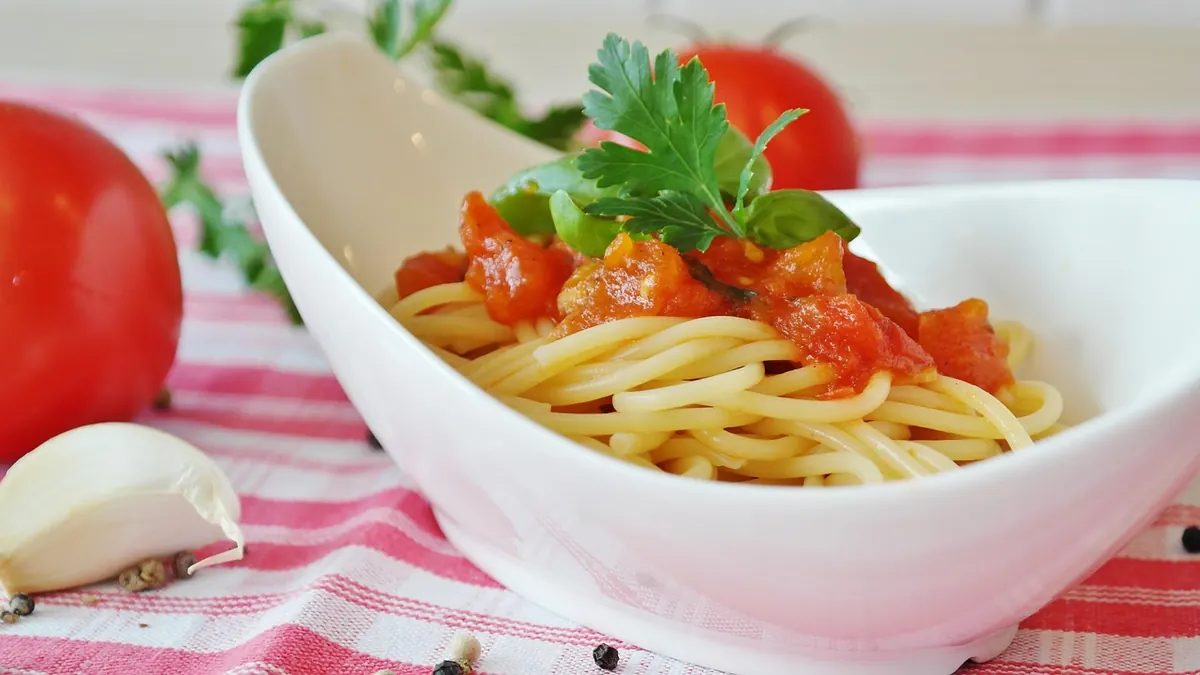
Bread also becomes the invisible binder in meatballs, stuffings, and kibbeh, and the crisp topping in Sicilian pasta dishes made with toasted breadcrumbs rather than cheese. At the table, it is the fork before the fork: a piece of pita scoops hummus, a wedge of khobz carries tagine, a slice of country loaf mops the last oil from a plate. This is one reason the Mediterranean bread basket can look austere and still feel generous. It is not there to be admired. It is there to work.
Breadcrumbs also preserve. Dried and toasted, they extend the life of a loaf for weeks; ground fine, they coat fish or vegetables; rubbed with garlic and fried, they become a poor cook's Parmesan. In a region where grain could fail, using every crumb was not a fashion. It was a form of household insurance.
Bread also marks time. In Turkey, Ramadan pide appears in bakeries in long, flat, sesame-flecked sheets during the fasting month. Greek Easter tables carry tsoureki, a rich braided bread scented with mastiha or orange. Italian Christmas and Easter breads — panettone, colomba, and their many regional cousins — are distant, enriched descendants of the same wheat culture, made with eggs, butter, and sugar that everyday loaves could not afford. Moroccan households may buy or bake special breads for Fridays, and in many villages the wheat harvest itself is still a calendar event, with loaves baked from the first flour of the year.
Festival breads are usually enriched, decorated, or shaped, and that is the point: they take the daily staple and make it speak. A plain loaf says survival. A braided loaf says celebration. A scored round with a stamped center says blessing, or memory, or welcome. The same grain that fills the bread basket on an ordinary Tuesday also carries the year's fasts, feasts, and family occasions.
Today, industrial milling and commercial yeast have made soft, cheap bread ordinary in every Mediterranean country, and supermarket loaves often contain little of the long ferment that once defined the craft. Yet the older habits have not disappeared. Sourdough revivals in cities from Athens to Barcelona, protected regional breads, and the persistence of village ovens all point back to the same conclusion: bread wheat is not just a crop in Mediterranean history. It is the grain that taught the region how to feed a crowd, how to turn a harvest into a calendar, and how to make a meal out of flour, water, salt, and time.
Photo: Couleur / Pixabay